
.avif)

Most HR teams already have a great deal on their plate. Engagement work gets squeezed between headcount reports, payroll queries and the next town hall, and it ends up as a single D&D or family day a year rather than a plan that runs continuously. That's a shame, because engaged employees are measurably more productive, and Gallup's global research puts the gap between engaged and disengaged teams at close to 18% in productivity terms.
This guide gives Singapore HR leaders, people & culture managers and admin/EA teams a step-by-step plan to improve employee engagement: how to measure engagement effectively, what actually drives it, how to build a plan that survives budget season, and where events, recognition and wellness fit in without becoming a once-a-year tick-box exercise.
What Employee Engagement Actually Means for Singapore Employers
Employee engagement is the emotional and practical commitment an employee has to their work and organisation, distinct from simple job satisfaction. A satisfied employee shows up and does the job; an engaged one brings discretionary effort, speaks well of the company, and sticks around.
In Singapore's tight labour market, that distinction matters commercially. Retention costs (recruitment, onboarding, lost productivity during handover) are real line items, and disengagement shows up first in small ways: quieter town halls, lower survey response rates, more last-minute leave applications around year-end.
The Local Twist: Large Workforces Are Rarely One Homogeneous Group
Singapore's larger employers, enterprises with thousands of staff, public-sector agencies and unions, rarely have a single kind of employee to engage. A 1,000-strong workforce typically spans frontline and shift-based teams, operational staff across multiple sites, and desk-based employees at head office, each with different schedules and different ideas of what a good engagement touchpoint looks like. Any engagement plan at this scale needs to flex across those groups, not just apply "best practice" designed for a single office floor.
Why a One-Off Event Isn't a Strategy
A single dinner & dance or annual outing generates a short-term morale bump, but engagement research consistently shows it fades within weeks unless it's backed by ongoing recognition, communication and manager behaviour. Treat events as touchpoints in a calendar, not the calendar itself.
Step 1: Measure Engagement Before You Try to Fix It
You cannot improve what you haven't measured. Before committing a budget to any initiative, run a proper engagement survey and get a baseline.
How to do this well:
- Use a short, recurring pulse survey (quarterly or even monthly) rather than a single annual monster survey that takes 20 minutes to complete and gets abandoned halfway.
- Ask about the drivers that predict engagement, not just overall happiness: clarity of role, manager support, recognition frequency, growth opportunities and workload.
- Segment results by department, tenure and seniority. A 65% engagement score company-wide can hide a frontline team sitting at 30%.
- Always close the loop. Employees who fill in surveys and never hear what happened next disengage faster than employees who were never surveyed at all.
Tip: If you're short on survey tooling, even a simple, anonymous Google Form with 8 to 10 consistent questions run every quarter beats an elaborate one-off study. Consistency matters more than sophistication.
Step 2: Diagnose What's Really Driving Disengagement
Survey data tells you where the problem is; it rarely tells you why. This step is about turning numbers into a short list of root causes HR can act on.
Look at Manager Quality First
Research from Gallup attributes up to 70% of the variance in team engagement to the direct manager. If one department consistently scores low, it's rarely the "activities" that are missing; it's often unclear expectations, infrequent feedback, or a manager who hasn't been trained to have those conversations.
Separate Structural Issues from Cultural Ones
Some disengagement drivers need policy change (workload, pay benchmarking, flexible work arrangements); others need cultural change (recognition habits, communication transparency, how wins are celebrated). Mixing the two into one generic "engagement programme" wastes budget on the wrong lever.
Talk to People Directly
Stay interviews, skip-level conversations and small focus groups surface nuance that a Likert-scale survey misses. Aim for a handful of honest conversations across levels and departments before finalising your action plan.
Step 3: Build an Engagement Action Plan That Engages Your Entire Workforce
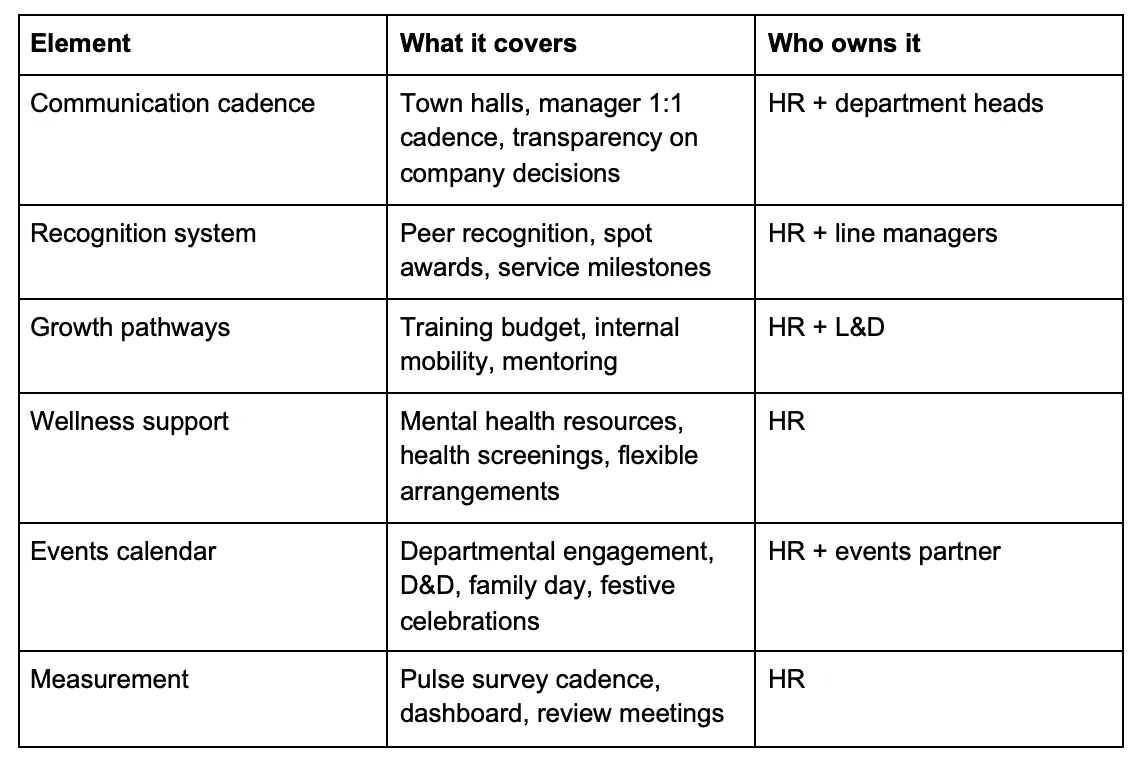
With a diagnosis in hand, translate it into a plan with owners, timelines and a realistic budget. This is the step most organisations skip, jumping straight from "survey results" to "let's do a workshop," which is why so many engagement efforts fizzle.
A workable plan typically includes:
Planning Engagement Across a 500+ Workforce
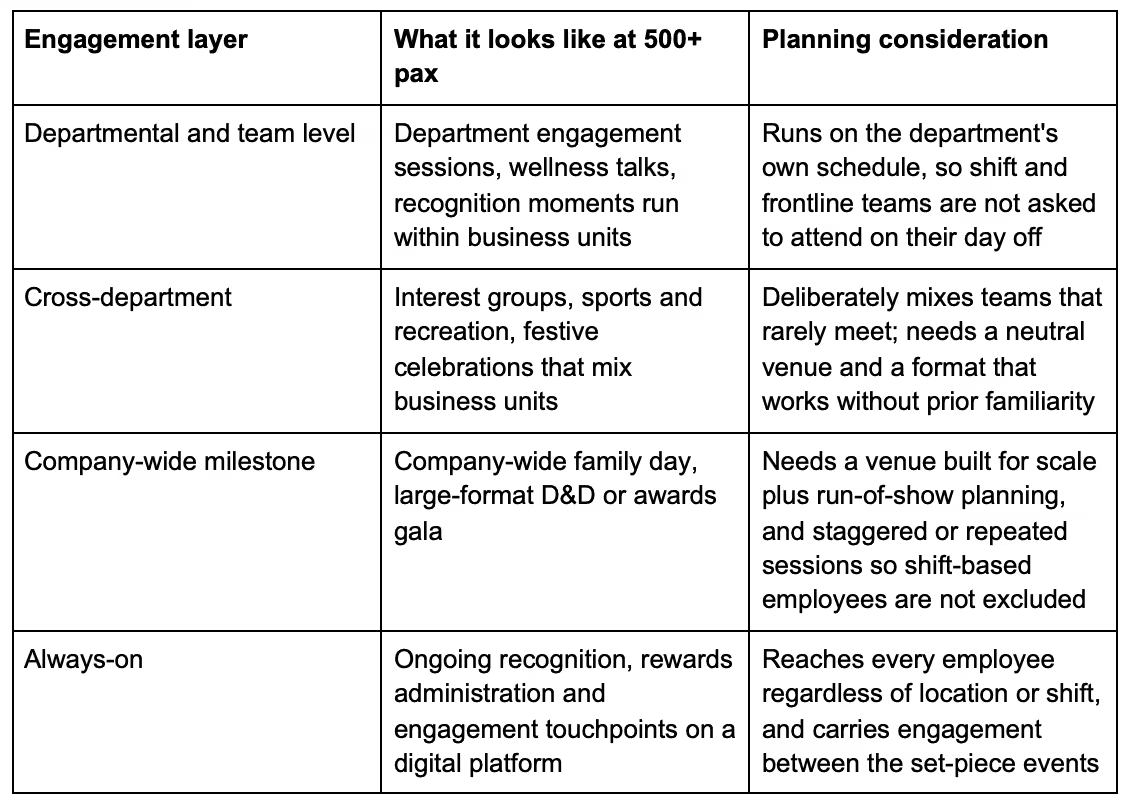
In a workforce of 500 and above, the question is not which single activity suits your headcount. It is how the layers fit together, because no one format reaches everybody. Frontline, shift-based and desk-based employees sit on different schedules, in different locations, and a plan that only works for whoever can leave their desk at 3pm on a Thursday will quietly exclude a large share of your people.
A stronger way to frame the plan for sign-off is by engagement layer, with each layer doing a job the others cannot:
For the exact costs and inclusions relevant to your headcount, it's worth requesting a package quote rather than guessing from a generic table. Every organisation's needs differ enough that ranges only get you so far.
Where a One-Stop Concierge Helps
Once your plan spans communication, recognition, wellness and events, coordinating vendors becomes its own project. This is where an events partner built specifically for corporate engagement, rather than a single-activity vendor, earns its keep, particularly for workforces of 500 and above that combine frontline, shift-based and desk-based employees. UPlay for Business, NTUC's corporate play arm and built on NTUC Club's events legacy since 1986, works across dinner & dance, family day and employee engagement, recognition and wellness under one team. The harder problem is not the five vendor relationships, though it solves that too; it is bringing very different groups of employees into one engagement programme. Scoping formats and schedules so operational, shift and office-based staff all get to enjoy the same recreation and celebration is what UPlay specialises in, so no employee is left behind. It's open to companies generally, not just unionised workplaces.
Step 4: Equip Managers, Because They Drive Most of the Variance
If Step 2 pointed to manager quality as a driver (and for most organisations, it will), this step can't be skipped.
Give Managers a Simple Feedback Rhythm
Weekly or fortnightly check-ins beat quarterly reviews for engagement purposes. The content matters less than the consistency: ask about blockers, recognise a specific win, and confirm priorities.
Train Managers on Recognition, Not Just Performance Reviews
Many managers default to giving feedback only during formal appraisals. Teach them to recognise good work in the moment, specifically and publicly where appropriate, since generic praise ("good job team") lands far weaker than specific praise ("the way you handled that client escalation on Tuesday was excellent").
Give Managers Visibility Into the Plan
Managers who understand the "why" behind an engagement initiative (a wellness talk, a recognition scheme, a family day) can reinforce it with their teams. Managers left out of the loop tend to treat these as HR's project rather than theirs.
Step 5: Bring the Plan to Life with Events, Recognition and Wellness
This is the most visible part of engagement work, and the part employees remember, but it only works when it sits on top of Steps 1 to 4 rather than replacing them.
Departmental Engagement That Fits the Objective
Not every department needs the same format. Match the activity to the actual goal: business units building rapport across functions benefit from collaborative sessions, while a team recovering from a tough project quarter might need something lighter and more social. Programmes that flex by department size, shift pattern and objective, rather than a fixed menu, tend to land better than a default "fun day out."
Milestone Events: Dinner & Dance and Family Day
Year-end D&D season and company family days remain two of the highest-attendance engagement touchpoints in Singapore, precisely because they include spouses, children or the whole organisation outside a work context. For larger gatherings, venue choice matters more than most planners expect: a pillarless blank-canvas space like D'Marquee in the Downtown East ecosystem gives HR flexibility for stage setups, seating configurations and large-scale D&D without a CBD or Marina Bay price premium. Family days benefit from the same east-side advantage, being close to Changi and Tampines, with room for large groups that city-centre venues simply can't offer at the same cost. Wild Wild Wet adds the option of a water-park family day, while Orchid Country Club in Yishun offers a more relaxed country-club setting for organisations willing to look beyond the east.
Note: Venue capacity, inclusions and exact pricing vary by date and package, so it's best to request a package quote once you know your rough headcount and preferred season.
Wellness and Staff Welfare
Mental health support, health screenings and fitness sessions increasingly sit inside the engagement remit rather than as a separate "benefits" line. The reason is that wellness feeds engagement directly: employees who feel physically and mentally supported have the capacity to bring discretionary effort in the first place, and a wellness programme is one of the clearest signals that an employer values people beyond their output. Wellness touchpoints also reach parts of the workforce that a single annual event cannot, since a health screening or a fitness session can be run on site and across shift patterns. Many of these, such as health screenings, fitness classes and wellness workshops, are best delivered through a curated partner network of vetted vendors, coordinated through one point of contact, rather than HR sourcing and managing each supplier independently.
Recognition Beyond the Annual Awards Night
Recognition works best when it's frequent and specific, not saved entirely for one annual ceremony. Spot awards, peer shout-outs and small milestone gestures (work anniversaries, project completions) keep recognition visible throughout the year. A UPlay customised employee portal supports ongoing recognition, rewards and engagement in one place, rather than relying purely on one-off events to carry the whole programme.
If you're weighing up vendors for any of this, it's worth seeing how similar organisations structured their calendar. Our case studies walk through how other Singapore companies planned their engagement mix across the year.
Step 6: Track Progress and Keep the Plan Alive All Year
The plan doesn't end once the family day photos are uploaded. Close the loop by measuring again.
Re-run the Pulse Survey
Compare scores against your Step 1 baseline on the same core questions. Look for movement in the specific drivers you targeted, not just an overall "vibe" number.
Report Back to the Business
Share a short summary with leadership and with employees themselves: what the survey found, what HR did about it, and what moved. This transparency is itself an engagement driver, closing the loop that so many organisations forget.
Revisit the Calendar Quarterly
Engagement plans go stale when they're set once a year and left alone. A quarterly review, checking what worked, what had low turnout, and what budget is left, keeps the plan responsive rather than static.
For more planning frameworks like this one, browse the rest of our blog and articles to get more valuable insights.
FAQ
How often should we measure employee engagement?
Quarterly pulse surveys strike the best balance for most organisations: frequent enough to catch problems early, infrequent enough that employees don't experience survey fatigue. Pair this with an annual deeper-dive survey if you need benchmarking data.
What's the difference between employee engagement and employee satisfaction?
Satisfaction measures whether an employee is content with their job and conditions, while engagement measures their emotional commitment and discretionary effort. An employee can be satisfied (fair pay, reasonable hours) without being engaged (motivated, proactive, likely to stay long-term).
How much should a company budget for employee engagement activities in Singapore?
Budgets vary widely by company size, industry and objectives, so there's no universal per-head figure that holds up across a 300-pax organisation and a 1,000-pax enterprise. The more useful approach is to define your objectives and headcount first, then request a tailored quote from an events partner who can scope options against your actual budget.
Can a large workforce stay engaged between the big annual events?
Yes, and it usually comes down to the low-cost habits rather than the budget line. Consistent manager check-ins, peer recognition and departmental engagement sessions run within business units often move engagement scores more than a single expensive annual event, and they reach shift and frontline teams that a one-off gathering can miss. Budget-heavy activities matter most for milestone moments like year-end celebrations, not for sustaining engagement day to day.
How do we know if an engagement event actually improved engagement?
Track it against the same drivers you measured before the event: did communication scores, recognition scores or team cohesion move in the follow-up pulse survey? Attendance and immediate feedback forms are useful but don't confirm lasting impact on their own.
Conclusion
Improving employee engagement in Singapore isn't about picking the flashiest activity for this year's calendar. It's a sequence: measure honestly, diagnose the real drivers (manager quality especially), build a plan with clear owners and budget, equip managers to carry it day-to-day, and then bring it to life through events, recognition and wellness that actually match your people's needs. Review it every quarter, and the plan compounds instead of resetting to zero each January.
If your organisation is shifting towards the recommended calendar of activities, from departmental engagement sessions through to a 1,000-pax family day or D&D, UPlay for Business can help you scope it as a one-stop planner across venue, catering and logistics. Request a package quote to get options tailored to your headcount and budget, or learn more by seeing how other companies succeeded.