
.avif)

HR teams in Singapore face a recurring challenge: finance requires evidence that the benefits budget is delivering value, while employees report that they do not feel its impact. The issue is not a shortfall in spending. CPF contributions, leave entitlements and health cover are standard across the market. The gap sits between what is documented in policy and what employees notice day to day.
This article examines what Singapore employees report valuing most heading into 2026, why national engagement figures indicate that conventional wellness benefits are not sufficient on their own, and how HR teams can convert a benefits budget into experiences employees remember rather than line items in an offer letter. Whether your organisation is planning for a few hundred employees or a 1,000-pax year-end event, the same principle applies: the benefits that sustain loyalty are the ones employees experience together.
What Counts as an Employee Benefit in Singapore?
Singapore's benefits landscape splits into two layers: what the law requires, and what employers choose to add on top. Understanding both helps HR planners see where the real differentiation happens.
Statutory benefits are the floor, not the finish line
Under the Employment Act, most full-time, part-time and contract staff who have completed at least three months of service are entitled to core protections: paid annual leave (starting from seven days and rising with tenure), paid sick leave, and maternity and paternity leave. These are non-negotiable minimums, and every credible employer meets them.
CPF contributions remain the backbone of retirement benefits
For Singapore citizens and PRs, employers contribute to the Central Provident Fund on top of salary. From January 2026, contribution rates for employees aged 55 and below hold steady at a combined 37% (17% employer, 20% employee) on wages up to the raised S$8,000 Ordinary Wage ceiling, while rates for workers above 55 continue to step up as part of Singapore's push to strengthen retirement adequacy for senior employees. Foreign employees typically sit outside CPF, which is one reason employers hiring internationally often add supplemental health or retirement allowances.
Voluntary benefits are where employers compete
Once the statutory floor is covered, everything else, health insurance top-ups, bonuses, flexible work, wellness programmes, recognition schemes, and employee events, is where companies differentiate themselves in a tight labour market. This is also where employee perception diverges most sharply from what HR believes it is providing.
What Singapore Employees Actually Value in 2026
Robert Half's 2026 Singapore salary guide, drawn from a survey of finance, accounting and IT professionals, gives a clear ranking of what staff say matters most: work-life balance and flexible work arrangements (68%), financial benefits such as bonuses and stock (64%), health benefits (46%), professional development (39%), and retirement or financial planning and family/caregiving support (29% each).
Flexibility now outranks pay for many staff
As more companies review their remote and hybrid work arrangements, some employees may place greater value on other aspects of their employment experience, such as additional leave, enhanced benefits or clearer boundaries around after-hours communication. Organisations should consider how these elements contribute to their overall employee value proposition.
Bonuses are viewed as essential, not optional
Financial benefits ranked second for a reason: 98% of Singapore employees in the same survey said a comprehensive benefits package factors into whether they stay, and 52% called it a fundamental requirement. Bonuses that arrive smaller or later than expected do real damage to trust, even when base pay is competitive.
Note: If your organisation is reviewing its benefits mix for the year ahead, treat this ranking as a starting point, not a script. A survey of finance and tech professionals will skew differently from a logistics or manufacturing workforce; a quick pulse survey of your own employees will tell you more than any national average.
The engagement gap that wellness alone can't close
Gallup's Singapore Workplace Report 2026 found only 14% of the local workforce is actively engaged at work, well below the Southeast Asian average of 25% and the global average of 20%, even though Singaporeans rate their overall wellbeing slightly above regional norms. Younger employees under 35 are less engaged than their older colleagues. In other words, wellness programmes and benefits packages exist, but they don't translate into genuine workplace connections. That disconnect is exactly where shared experiences, not just policies, start to matter.
The Benefits That Build Loyalty Without Increasing the Budget
Not every benefit that improves engagement requires a larger budget line. Some of the most valued ones cost more in thought than in dollars.
Recognition employees genuinely notice
Roughly 80% of Singapore employees say they would stay longer with an employer who regularly shows appreciation. Recognition has to be timely and specific to land; a generic annual award means far less than a manager naming a specific contribution soon after it happens. Building this into your employee engagement, recognition and wellness approach, rather than treating it as a once-a-year event, makes all the difference.
Employee experiences that create lasting engagement
Experiential rewards such as recognition ceremonies, wellness activities and organisation-wide celebrations consistently outperform generic perks because they give employees a shared reference point rather than a one-way transaction between employer and employee. Well-run employee experiences serve two purposes: they are a benefit employees value, and they build the cross-functional familiarity that daily engagement scores struggle to capture.
Personalisation across a mixed workforce
Singapore's workforce spans Millennials, Gen Z, and long-tenured employees with very different expectations. A one-size-fits-all rewards catalogue increasingly misses the mark; the employers getting this right are the ones offering a menu of experiences and recognition formats rather than a single default option.
Workplace Wellness Programmes That Go Beyond a Gym Pass
Wellness has moved past the gym membership and fruit bowl. In 2026, the programmes that employees truly value combine physical, mental, and measurable elements.
Physical wellness with real accessibility
On-site fitness classes, health screenings, and ergonomic assessments matter more when they are easy to access. Curated via our partner network, options like guided fitness sessions and health screening days can be scheduled around your team's calendar rather than treated as a one-off wellness week.
Mental health support as a daily practice, not an annual talk
Leading employers are embedding mental health support into the working week itself, through accessible support channels and regular touchpoints, rather than a single annual seminar. Senior leaders in Singapore have flagged that existing wellbeing programmes often fail to prevent work overload. Curated mental wellness workshops, resilience sessions and guided support activities delivered through an established partner network give HR a practical way to provide that consistent support without building the capability in-house.
Measuring whether the programme is working
Always get feedback. Simple pulse surveys after a wellness initiative or a family event tell you more about impact than attendance numbers alone. If a programme is not shifting how employees describe their week, it is worth revisiting the format before renewing the budget.
Turning Benefits Into Experiences Employees Remember
This is where policy becomes experience. Salary and statutory benefits are what bring employees into an organisation, but sustained engagement is what supports long-term retention: a well-run dinner and dance, a family day that includes the people who support employees at home, or a recognition programme that made employees feel valued. These are the touchpoints that keep people connected to the organisation over time.
Dinner and dance still anchors the engagement calendar
Year-end D&D season remains one of the few moments an entire organisation gathers in one room. Delivered on top of everyday engagement efforts, a well-organised dinner and dance reinforces morale across the whole organisation in a single evening, provided the venue, catering and programme are executed well.
Family days extend the benefit to the people who support your staff at home
A family day signals that the organisation values employees beyond their job description, which is exactly the kind of recognition that survey data says Singapore employees respond to. These events scale from a modest afternoon for a single department to a 1,000+ pax celebration with carnival rentals and stage entertainment curated via a trusted partner network.
If you are ready to put numbers behind an upcoming event, Request a Package Quote and receive a straightforward proposal to bring to your budget sign-off conversation.
Building a Benefits Calendar HR Teams Can Execute
The best benefits strategy on paper still fails if it is not operationally realistic for a small HR or admin team to run alongside their day job.
Start with a yearly rhythm, not a wish list
Most organisations in Singapore anchor their calendar around a few fixed points: a mid-year employee engagement initiative, a year-end D&D, and either a family day or a wellness push, spaced so no single quarter is overloaded and budget can be planned in advance rather than requested ad hoc.
Choose venues that stretch the budget further
Venue costs in the CBD or Marina Bay area carry a premium that eats into the experience budget before the first activity is even booked. East-side venues near Changi and Tampines, including the Downtown East ecosystem with D'Marquee's pillarless event space, Wild Wild Wet, and Orchid Country Club, give planners room for larger groups without that city-centre price tag. Browse venues and partner locations to compare formats before locking in a date.
Keep engagement going between events
A single flagship event a year won't close the engagement gap on its own. A customised employee portal gives HR a platform for ongoing recognition and engagement touchpoints, so the value extends beyond a single event to continuous employee engagement throughout the year.
Tip: Before finalising next year's calendar, ask three or four employees from different teams what they remember from this year's events. It is the fastest, most cost-effective engagement audit available to you.
Scaling Benefits Across a Large Workforce
Group size changes what is realistic, but not what employees value. The approach shifts roughly as follows.
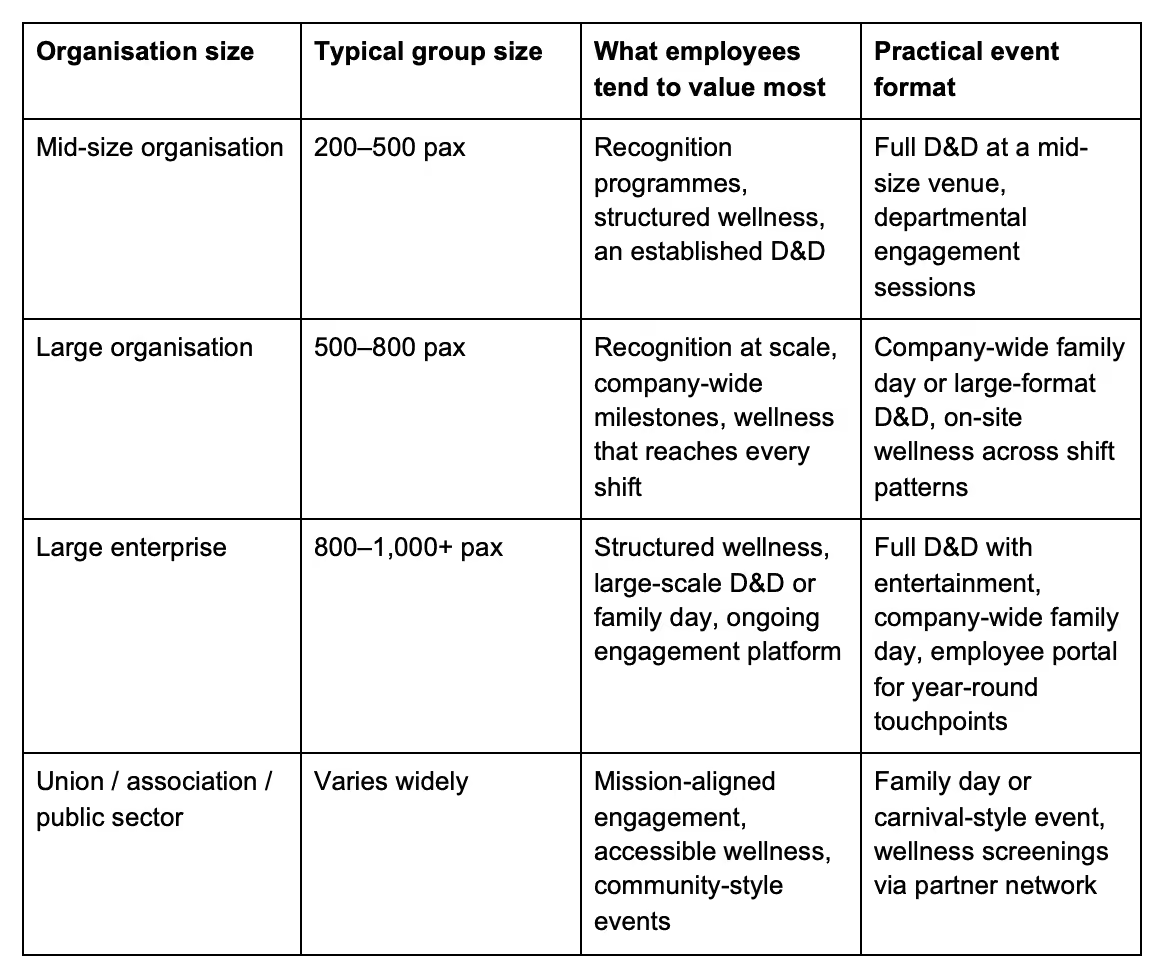
Whatever tier your organisation sits in, the planning workload does not shrink proportionally with group size; it changes shape. Reviewing how other organisations approached similar events is often the fastest way to benchmark your own plan before briefing stakeholders.
FAQ
What are the mandatory employee benefits in Singapore?
Under the Employment Act, most staff are entitled to paid annual leave, paid sick leave, and maternity or paternity leave once they have completed the minimum service period, typically three months. Singapore citizens and PRs also receive mandatory CPF contributions from their employer on top of salary.
What do Singapore employees value most in 2026?
Survey data points to flexibility and work-life balance as the top priority, followed closely by financial benefits like bonuses, with health benefits, professional development, and retirement or family support ranking below that. Non-monetary factors like recognition carry more weight than many employers assume.
Why is employee engagement in Singapore still low despite wellness spending?
National data shows engagement has stayed flat for years even as wellbeing scores hold steady, suggesting the disconnect is less about the presence of benefits and more about whether employees feel genuinely recognised, supported by capable managers, and connected to colleagues day to day.
How often should companies run employee engagement programmes?
There is no fixed rule, but most organisations anchor the year around quarterly engagement touchpoints, including a year-end D&D and a family day or wellness initiative, supported by smaller recognition moments in between.
Does a 300-person organisation need the same benefits as a 1,000-pax enterprise?
Not the same scale, but the same intent. A 300-person organisation will not run the same company-wide family day as a 1,000-pax enterprise, but a consistent recognition programme and a well-executed D&D deliver the same sense of being valued.
Conclusion
The data is consistent: Singapore employees in 2026 want flexibility, they want financial benefits to be fair and timely, and they want to know their employer notices them, not just once a year, but as an ongoing practice. National engagement figures show that meeting the wellness requirement is not enough on its own; the benefits that build loyalty are the ones employees experience together, whether that is a well-executed dinner and dance, a family day that includes the people who support them at home, or a recognition culture that shows up in the small moments.
UPlay for Business, built on NTUC Club's events legacy since 1986 and open to organisations of every kind, exists to take the logistics off your plate so you can focus on the experience itself. From employee recognition and wellness programmes to Family Days, Dinner & Dance celebrations and workforce engagement solutions, UPlay for Business helps organisations deliver meaningful experiences at scale while reducing administrative effort for HR teams. Request a Package Quote to start planning your next event, or browse our blog and articles for more HR planning playbooks.