


Planning a corporate dinner and dance for a large workforce is a different exercise from booking a team dinner. At 500, 800 or 1,000+ employees, every decision carries operational weight: the venue must physically hold the organisation, catering must serve everyone hot food within a fixed window, and the programme must engage frontline, shift-based and desk-based colleagues who may rarely share a room. Add Singapore's year-end peak season, when the most suitable large-format venues are confirmed months in advance, and the margin for a late start shrinks quickly.
This playbook walks through the full arc of planning a Dinner & Dance: setting objectives and securing budget sign-off, selecting a venue built for scale, designing the theme and run-of-show, curating catering and entertainment, and working to a realistic timeline. It also covers a key element many plans miss: how to ensure the night amplifies your engagement calendar rather than standing in for it.
Start With Objectives and Budget Sign-Off
The strongest Dinner & Dance plans begin with a written statement of what the night is for, because that statement shapes every downstream decision and every conversation with finance. Skipping this step is the most common reason large events drift over budget or under-deliver.
Define what the night is for
Most organisations run a D&D to accomplish a combination of four things: celebrate the year's outcomes, recognise individuals and teams in front of their peers, bring a dispersed workforce into one room, and give leadership a visible moment of appreciation. Rank these, because a night built around recognition needs a longer, better-produced awards segment, while a night built around celebration invests more in entertainment and the dance floor.
Objectives also determine who must be in the room. For workforces with shift-based and frontline employees, that may mean scheduling around rosters, arranging transport from worksites, or planning the date clear of peak operational periods.
Build a budget that survives finance review
Finance teams approve budgets that are itemised and tied to objectives, so present the D&D as line items rather than a single figure: venue, food and beverage, audio-visual production and staging, theme and decor, emcee and entertainment, awards and prizes, photography, and a contingency buffer. At 500 to 1,000+ guests, food and beverage and the venue typically form the largest lines, which makes venue selection the single most consequential cost decision in the plan.
Avoid anchoring on a per-head figure before venues and menus are scoped. Request itemised quotes for your actual headcount and date, then present finance with real numbers rather than estimates.
Position the D&D within year-round engagement
A Dinner & Dance is a milestone, not an engagement strategy on its own. Position it at sign-off as the company-wide peak of a year-round calendar that also includes recognition programmes, wellness initiatives and departmental engagement sessions. Framed this way, the D&D budget becomes easier to justify, because the night amplifies work the organisation is already doing rather than carrying the entire engagement remit for the year.
Choosing a Corporate Dinner and Dance Venue for a Large Workforce
The right venue for a large-scale corporate dinner and dance is the one that holds your full headcount in a single space, with the technical infrastructure a produced show needs, at a rental that leaves room in the budget for the programme itself.
What 500 to 1,000+ guests actually require
Whether your workforce sits at 500 to 800 pax or 800 to 1,000+, large-format D&Ds depend on details that smaller events never surface: unobstructed sightlines to the stage from every table, sufficient rigging and power for production-grade audio-visual, loading access for contractors, holding areas for performers, and enough entry points to seat hundreds of guests without queues. Ask every shortlisted venue how these work at your specific headcount, not in general.
Location matters differently at scale. City-centre ballrooms carry a premium that multiplies across hundreds of guests, while venues outside the CBD can release meaningful budget back into food, production and prizes.
D'Marquee and the function rooms at Downtown East
D'Marquee at Downtown East offers 2,400 sqm of pillarless, air-conditioned event space, which suits a large D&D for a practical reason: no pillars means no blocked sightlines, so every table sees the stage and the awards moments land for the whole room. As a blank-canvas space, it also gives theme and staging contractors freedom to build the night from the floor up.
Its east-side location near Changi and Tampines comes without the CBD or Marina Bay premium, which matters when venue cost is multiplied across 500 to 1,000+ guests. D'Marquee is one of UPlay for Business's owned venues, so venue, programme and vendors can be coordinated through a single point of contact. The Begonia Ballroom sits in the same precinct and seats up to 550, with the Cassia and Aster rooms adding space for departmental celebrations, pre-event holding areas or a separate awards dinner.
Orchid Country Club in Yishun
For organisations in the north, Orchid Country Club in Yishun offers ballroom-style event spaces alongside extensive recreational facilities. A classic ballroom setting is available on the east side too, at the Begonia Ballroom at Downtown East. The more formal setting suits gala-style evenings with long-service award presentations and leadership addresses.
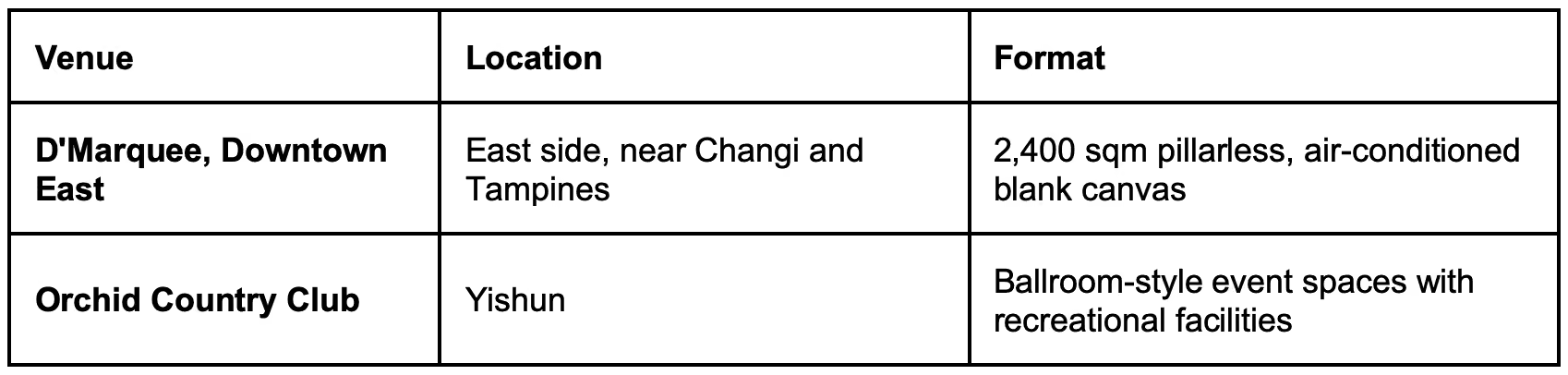
Both venues, along with partner locations island-wide, are covered on UPlay for Business's venues and partner locations page. Capacity for your specific configuration (banquet rounds, stage size, dance floor) depends on your setup, so confirm numbers against your actual floor plan at enquiry.
Theme, Programme and Run-of-Show
A strong programme keeps dinner service, speeches, awards and entertainment moving without dead air, and it is designed on paper months before anyone steps on stage.
Choose a theme that includes everyone
The best D&D themes are easy to dress for, decorate at scale, and inclusive of a workforce that spans ages, roles and cultures. Retro decades, cinema and red-carpet glamour, masquerade and heritage-inspired themes remain popular in Singapore because they give guests a low-effort way to participate. Test any shortlisted theme against two questions: can a frontline employee coming off shift take part without expensive preparation, and does the theme scale visually across a very large room?
Build the run-of-show early
A written run-of-show is the operational backbone of the night: arrival and cocktails, seating, dinner service waves, speeches, awards blocks, entertainment sets, the lucky draw and the dance floor, each with timings and technical cues. Two principles help at scale. First, keep the formal segment tight; long unbroken blocks of speeches drain a large room quickly. Second, interleave awards and entertainment between dinner courses so energy builds rather than sags.
Share the final run sheet with every vendor, presenter and venue contact, and rehearse the technical cues with the emcee and production crew before doors open.
Treat awards segments as recognition moments
An awards block is often the most memorable part of the night, because it is the one moment an employee's contribution is named in front of the entire organisation. Build it deliberately: long-service milestones, values-based awards and team achievements, each with a short citation that says specifically what the person or team did. For many frontline and shift-based employees, the D&D stage is the most visible recognition they receive all year, which is a strong argument for giving the segment proper production value rather than rushing it between courses.
Catering, Emcees and Entertainment at Scale
Feeding and entertaining 500 to 1,000+ guests is as much a coordination challenge as it is a matter of quality and this is where vendors with large-format events experience makes a difference. The UPlay for Business team can arrange catering services, emcees and entertainment alongside the venue, so all four are briefed once and scheduled together.
Catering for a very large room
At this scale, the catering conversation should cover service style (plated, buffet lines or a mix), the number of service points needed to avoid queues, dietary and halal requirements across a diverse workforce, and how hot food reaches the furthest tables. Ask caterers specifically about the largest events they have served and how many service crew they deploy for a room of your size.
Emcees, entertainment and production
An experienced emcee is the difference between a programme that flows and one that stalls; for large rooms, look for emcees who have worked events at comparable scale and can manage bilingual audiences where needed. Entertainment options range from live bands and dance crews to interactive segments and headline acts. UPlay for Business curates emcees, entertainers, caterers and production partners via its partner network, matched to your theme, audience profile and budget, and coordinated alongside the venue through one team.
If you are weighing venues, formats or programme options for your year-end event, request a package quote with your headcount and preferred dates, and the team can shape options around your budget before you commit to anything.
One brief, one point of contact
Coordinating a venue, caterer, emcee, production crew and decorator separately multiplies the meetings, quotes and points of failure an HR team must manage. Running the event through a single team means one brief, one consolidated timeline and one accountable contact on show night, which matters most in the final fortnight when changes come quickly.
Corporate Dinner and Dance Planning Timeline
The year end is peak Dinner & Dance season in Singapore, and the large-format venues that can hold an entire workforce are the scarcest resource, so the timeline works backwards from venue confirmation.
Nine to twelve months out: lock the fundamentals
Confirm objectives, secure budget sign-off in principle, and shortlist venues for your headcount. For dates between October and January, aim to confirm the venue as early as nine to twelve months ahead; spaces that can seat 500 to 1,000+ guests in one room are limited island-wide, and the most suitable dates are the first to go. Booking early also strengthens your negotiating position rather than leaving you to take whatever remains.
Six to three months out: build the night
Confirm the theme, appoint the emcee, book entertainment and finalise the catering menu. Open employee communications: save-the-date notices, dress guidance and, for shift-based teams, early coordination with operations so rosters can be planned around the date. Begin collecting nominations for awards categories so citations can be written properly rather than at the last minute.
The final month: rehearse and reconcile
Lock the run-of-show, confirm final attendance numbers for catering, brief every vendor against the same run sheet, and hold a technical rehearsal covering audio-visual cues, award sequences and the emcee's script. Reconcile spend against the approved budget while there is still time to adjust, and prepare a wet-weather or contingency plan for arrival logistics.
Tip: If your preferred date falls in November or December, treat venue confirmation as urgent from the moment budget is approved. A confirmed venue can be announced early, which also lifts anticipation across the workforce.
Making the Night Count Beyond the Night
A Dinner & Dance delivers the most value when it is the visible peak of an engagement calendar, not the whole of it.
Amplify year-round engagement, never substitute for it
One evening, however well produced, cannot carry engagement for a workforce of hundreds across twelve months. What it can do is amplify: the stories, photographs and award moments from the night become reference points that ongoing recognition and wellness programmes build on. Organisations that treat the D&D as the celebration layer on top of everyday engagement efforts get more from both.
Carry recognition into the year
The recognition momentum a D&D creates fades unless something carries it forward. A [customised employee portal](https://www.uplaybusiness.com.sg/introduction-to-uplay-portal) gives HR one place to run recognition, rewards and engagement activities across a large workforce between set-piece events, reaching frontline, shift-based and desk-based employees on their own schedules. Pairing the annual night with an always-on platform turns one evening of recognition into a year-round rhythm, and it markedly reduces the administrative load of running rewards at scale.
Learn from organisations that have done it
Before finalising your own format, it helps to see how comparable Singapore organisations structured their events, from programme choices to how awards were handled. UPlay for Business's case studies show how other companies approached large-scale celebrations and what their HR teams prioritised.
FAQs on Corporate Dinner and Dance Planning
What is a corporate dinner and dance?
A corporate dinner and dance (D&D) is an annual company celebration, typically held towards year-end in Singapore, that combines a formal dinner with entertainment, awards and dancing. It serves as a company-wide moment of celebration and recognition, bringing employees from every department, site and shift into one room.
How far in advance should we book a D&D venue in Singapore?
For October-to-January dates, confirm the venue as early as nine to twelve months ahead, because year-end is peak season and venues that hold 500 to 1,000+ guests in a single space are limited. Off-peak months offer more flexibility, but large-format spaces still benefit from early confirmation.
How long should a Dinner & Dance programme run?
Most corporate D&D evenings run around three to four hours from arrival to the final dance set. Keep the formal segment of speeches and awards tight and interleave it with dinner service and entertainment, since long unbroken speech blocks drain the energy of a large room.
How do we include shift-based and frontline employees in a D&D?
Plan the date with operations early so rosters can be arranged around it, consider transport from worksites, and choose a theme that does not demand expensive preparation. During the programme, make sure awards categories recognise frontline and operational contributions, not only head-office roles.
What should a D&D awards segment include?
A strong awards segment combines long-service milestones, values-based individual awards and team achievement awards, each presented with a short, specific citation. Collect nominations well in advance and give the segment proper staging, because for many employees it is the most visible recognition they receive all year.
Bringing Your Dinner & Dance Together
A successful corporate dinner and dance for a large workforce is won early: objectives that earn budget sign-off, a venue confirmed ahead of the year-end rush, a run-of-show designed around recognition, and vendors coordinated through one accountable team. Planned this way, the night becomes the most visible moment in your engagement calendar and a genuine amplifier for everything else you run across the year. From employee recognition and wellness programmes to Family Days, Dinner & Dance celebrations and workforce engagement solutions, UPlay for Business helps organisations deliver meaningful experiences at scale while reducing administrative effort for HR teams. Request a package quote with your headcount and preferred dates, or see how other companies did it in our case studies.