
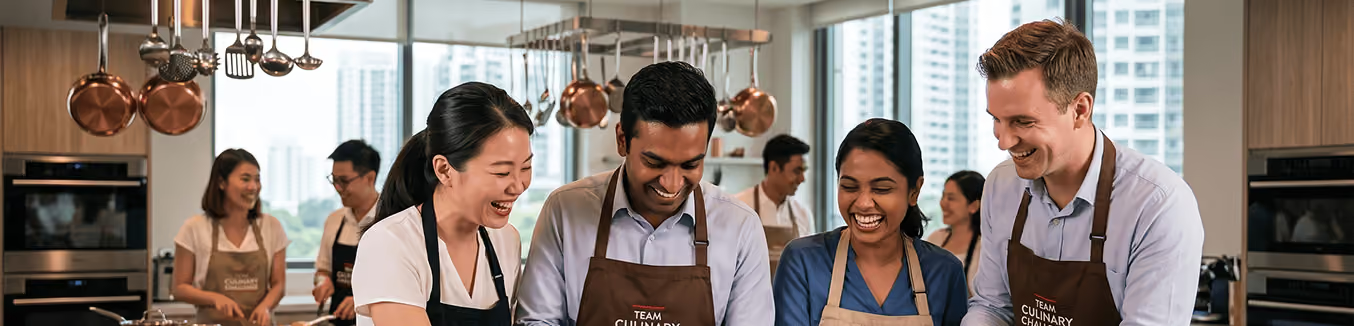
Finding a single engagement activity that works for an entire workforce is one of the more challenging briefs on an HR calendar. A corporate cooking class in Singapore answers more of that brief than most formats: it is hands-on without demanding fitness or stage confidence, it works across seniority levels and job types, and it ends with the one thing every part of a Singapore workplace shares, which is a good meal.
This guide explains what a corporate cooking class involves, why the format suits corporate groups, and how it scales from a single departmental session to a programme that reaches frontline, shift-based and desk-based employees alike. It also covers where cooking classes sit in an engagement calendar, from appreciation initiatives to festive celebrations, and how to turn a single afternoon in the kitchen into ongoing engagement through recognition tie-ins and a customised employee portal. UPlay for Business, the corporate engagement arm of NTUC Club, curates cooking classes through its network of partner culinary studios, and runs the logistics around them: RSVP and attendance collection, transport from multiple work sites, and session itineraries built around your rosters, all arranged as corporate and group bookings through one point of contact.
What a Corporate Cooking Class in Singapore Involves
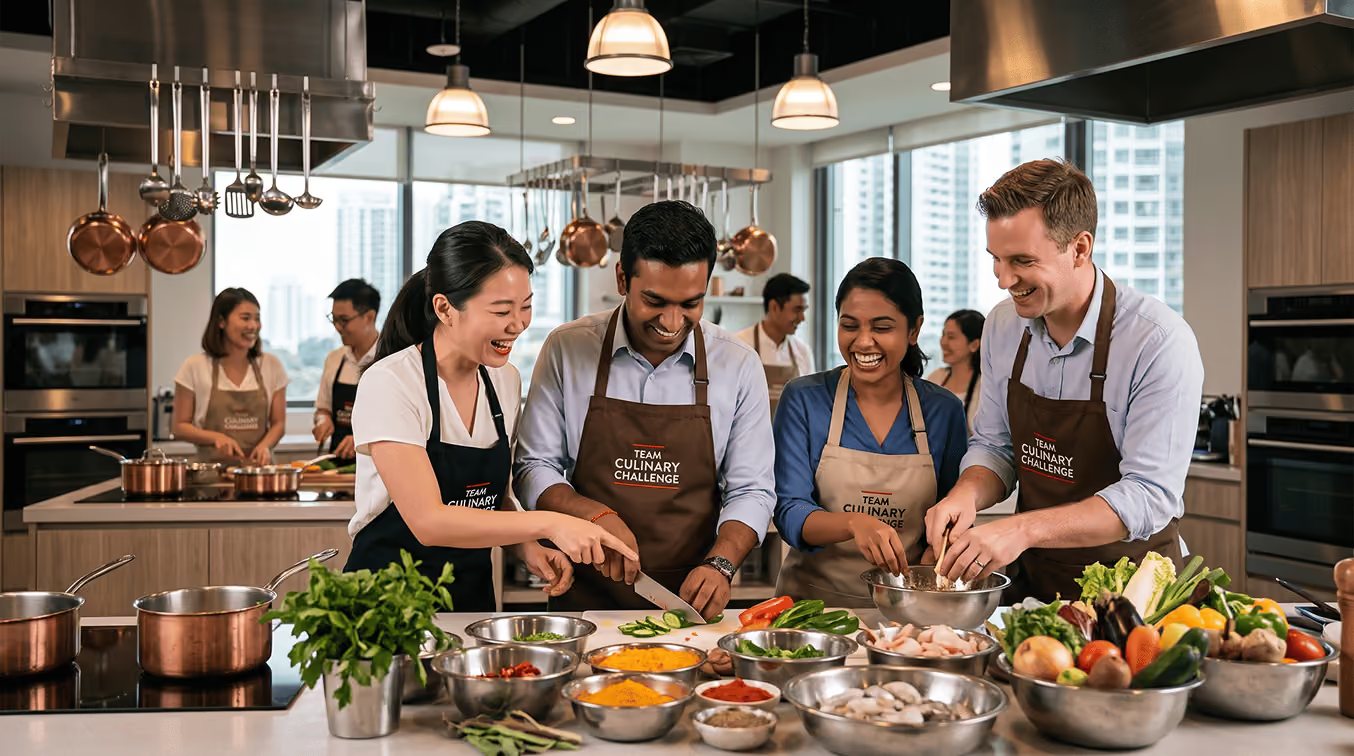
A corporate cooking class is a guided, hands-on culinary session for a company group, led by professional chefs and finished with a shared meal of the dishes participants have cooked. Sessions are structured, so no employee is left staring at raw ingredients wondering what to do.
A typical session, start to finish
Most sessions follow a similar arc: a short kitchen and safety briefing, a chef-led demonstration of the menu, hands-on cooking in small groups at prepared stations, then plating and a shared meal at the end. Studios typically run corporate sessions over two to four hours, which fits neatly into a half-day slot or an extended lunch block. Ingredients, equipment, aprons and recipes are prepared in advance, so the session asks nothing of participants except their presence.
Guided menus, not a free-for-all
Menus are confirmed before the day itself, and chefs guide every step, which is what makes the format work for employees who rarely cook. Groups can work through local favourites such as laksa, chicken rice or nonya kueh, or take on regional and international menus, dumpling making or pastry sessions. The guided structure means the output is reliably edible, and the shared meal at the end is a genuine reward rather than a gamble.
How UPlay for Business fits in
Sessions are curated via UPlay for Business's partner network of culinary studios across Singapore. One team shortlists suitable studios, aligns the menu with your dietary requirements, and coordinates dates, group splits, RSVPs, transport and session itineraries on your behalf. All arrangements are corporate and group bookings, scoped around your workforce and objectives rather than off-the-shelf consumer classes.
Why Cooking Classes Suit Corporate Groups
Cooking classes succeed as corporate experiences because they are collaborative without being competitive, they generate conversation naturally, and everyone eats together at the end. Few formats tick all three boxes at once.
Collaborative without being competitive
Station-based cooking gives every participant a task, whether that is chopping, stirring, seasoning or plating, and the group succeeds together when the dish comes out well. There is no scoreboard, no physical exertion and no stage, which matters in a mixed group where a competitive game can leave quieter employees or older colleagues on the sidelines. Skill levels matter less than people expect; the chef carries the expertise, and participants carry the conversation.
The shared meal does real work
Eating together is not just a pleasant way to end the session. Research from Cornell University on workplace eating habits found that work groups who ate together performed better, with cooperative behaviour roughly twice as high among colleagues who shared meals compared with those who did not. A cooking class builds that shared meal into the format itself: colleagues cook the food, then sit down and talk over it, often across departments and grades that rarely mix.
A natural fit for Singapore workplaces
Food is the most reliable common ground in a Singapore workforce, and the format leans into it. Through partner culinary studios, menus can be built around local cuisine, and halal-friendly kitchens and dietary-inclusive menus, including vegetarian and allergy-aware options, are available so that no employee has to sit out or eat separately. For organisations with employees across many nationalities and backgrounds, a well-planned menu is a quiet but visible statement of inclusion.
Cooking Class Formats for Large Workforces
A single kitchen session has a natural ceiling on headcount, so reaching a large workforce is a matter of format rather than squeezing everyone into one room. The practical approach is to plan by engagement layer: departmental sessions first, cross-department mixes next, and company-wide milestone moments at the top, with each layer using a format built for its scale.
Departmental rollouts
Rather than one oversized event, many organisations run a series of identical sessions department by department across several weeks. Everyone cooks the same menu, so the experience becomes a shared reference point across the organisation even though no single session held the whole workforce. Rollouts also spread the scheduling load, which makes cover arrangements easier for operational teams.
Parallel stations and staggered sessions for shift workers
Large workforces are rarely uniform: frontline, shift-based and desk-based employees work to different clocks and often at different sites. Parallel cooking stations allow bigger single sessions to run without queues, while staggered sessions, for example, a morning, afternoon and evening run of the same class, let shift workers attend without disrupting rosters. Where it is easier to bring the kitchen to the workforce, sessions can be arranged at suitable company or event premises through partner studios, so employees who cannot travel are not excluded by default.
Demo-plus-hands-on hybrids at scale
For company-wide milestone events, a hybrid format keeps the culinary thread without needing a station for every attendee. A chef-led live demonstration anchors the programme for the full audience, while rotating hands-on stations, such as kueh shaping, spice-paste making or cookie decorating, give everyone a tactile moment during the event. This works well within a larger celebration, where the cooking element is one highlight among several rather than the entire programme.
Where Cooking Classes Fit in the Engagement Calendar
Cooking classes are flexible enough to serve several different purposes across the year, which is why they earn a recurring slot in many engagement calendars rather than a single appearance.
A recurring engagement calendar activity
As a quarterly or half-yearly departmental activity, a cooking class offers variety alongside wellness initiatives and recognition moments in a broader employee engagement, recognition and wellness programme. Rotating menus keep repeat sessions fresh, so the format does not wear out the way a repeated one-off activity can.
Appreciation initiatives and cultural celebrations
A cooking class makes a strong employee appreciation initiative because the organisation is visibly investing time and planning in its people. The format also ties naturally into Singapore's festive calendar: pineapple tart sessions ahead of Chinese New Year, kueh making around Hari Raya, murukku or sweets for Deepavali, and festive cookie or log cake sessions for the year-end period. These tie-ins let different employee communities see their own celebrations reflected in the company calendar.
Conference breakouts and offsite programmes
Within a conference or corporate offsite, a cooking session works as an energising breakout between content-heavy blocks. It moves people out of their seats, mixes attendees who would otherwise sit with their own teams, and produces something concrete before the group returns to the agenda. The meal at the end does double duty, refuelling and re-energising delegates so they carry attention into the rest of the programme rather than flagging through the afternoon.
If you are weighing a cooking class against other engagement formats for your calendar, see how other companies structured their programmes, or request a package quote to discuss options regarding your headcount and dates.
Turning One Session into Year-Round Engagement
A cooking class delivers the most value when it sits on top of everyday engagement efforts rather than substituting for them. Two follow-through mechanisms do most of the work.
Pair the session with recognition
Recognition tie-ins convert a pleasant afternoon into a remembered gesture. Simple options include opening the session with a short appreciation message from leadership, awarding light-hearted certificates at the shared meal, or sending participants home with the recipe cards and photos from their session. Where the class is run for a specific group, such as a long-serving operations department, framing it explicitly as an appreciation initiative gives the event a clear purpose employees can name.
Administer follow-through with a customised employee portal
For large workforces, the administrative question is how to carry engagement between events across hundreds or thousands of employees. A customised employee portal gives HR one place to schedule rollout sessions, manage sign-ups across shifts and sites, share photos and recipes afterwards, and run recognition and rewards on a rolling basis. That is what keeps a cooking class from becoming an isolated memory: the same platform that booked the session carries the appreciation, points or follow-up activities that come after it.
Treat events as amplifiers, not the whole programme
Organisations that get lasting value from experiences treat them as amplifiers of a year-round engagement rhythm. A cooking class in March, a Family Day mid year and a Dinner & Dance in December land far better when everyday recognition and wellness activity continues in between, and the engagement calendar should be planned that way from the start. Spaced this way, each event arrives on top of goodwill that already exists, instead of being asked to create it from a standing start.
How to Book a Corporate Cooking Class in Singapore
Booking through a curated partner network is deliberately simple: you describe the workforce and the objective, and the team proposes studios, menus and formats to match. Two preparation steps speed the process up.
What to prepare before you enquire
Have a rough headcount and workforce profile ready: how many employees, the split between desk-based and shift-based teams, sites involved, and any dietary requirements such as halal, vegetarian or allergy needs. Add your preferred timing, especially if you are targeting a festive window, and the purpose of the session, whether that is appreciation, a cultural celebration or a recurring calendar activity. Precise numbers are not needed at this stage; ranges are enough for an initial proposal.
How curation and quoting work
UPlay for Business matches your brief against its partner culinary studios and returns a proposal covering format, menu direction and logistics, with one point of contact from enquiry through to delivery. Pricing depends on menu, format, headcount and venue arrangements, so we recommend requesting a package quote with the details above.
FAQs on Corporate Cooking Classes in Singapore
Do participants need any cooking experience?
No. Corporate sessions are designed for complete beginners, with a chef demonstration first and guided, station-based cooking afterwards. Ingredients are pre-portioned and recipes are provided, so employees who have never cooked can participate fully.
Are halal and other dietary requirements catered for?
Yes. Partner culinary studios include halal-friendly kitchens, and menus can be adapted for vegetarian, vegan and allergy-aware requirements when these are flagged during planning. Sharing your workforce's dietary profile at the enquiry stage ensures the shortlisted studios fit from the start.
How long does a corporate cooking class take?
Most corporate sessions run between two and four hours, covering the briefing, chef demonstration, hands-on cooking and the shared meal. Shorter demo-plus-tasting formats can fit a conference breakout slot, while fuller hands-on menus suit a half-day programme.
Can a cooking class work for a workforce of more than 500 employees?
Yes, with the right format. Departmental rollouts run the same session across multiple dates, staggered sessions cover shift patterns, and demo-plus-hands-on hybrids let a company-wide event include a culinary element without a station for every attendee. The format is chosen to fit the workforce, not the other way around.
How far in advance should we book?
The larger the group, the earlier you should start, since multi-session rollouts need a run of dates rather than a single slot. Festive windows such as Chinese New Year and the year-end period are peak demand across studios, so enquire well ahead if your session is tied to a celebration.
Bringing Your Workforce to the Same Table
A corporate cooking class in Singapore is one of the few engagement formats that is inclusive by design: guided enough for beginners, collaborative without being competitive, adaptable to halal and dietary needs, and finished with a meal the group made together. With the right format, it scales from a single departmental session to a rollout that reaches shift workers and frontline teams, and with recognition tie-ins and a customised employee portal behind it, the value carries on well after the plates are cleared. From employee recognition and wellness programmes to Family Days, Dinner & Dance celebrations and workforce engagement solutions, UPlay for Business helps organisations deliver meaningful experiences at scale while reducing administrative effort for HR teams. Request a package quote to plan your session, or browse our case studies to see how we have elevated engagement for different organisations.