


Planning an awards night for a workforce of hundreds or thousands brings a familiar set of questions into much sharper focus. Which corporate awards night ideas translate into categories that mean something to a warehouse supervisor as well as a finance analyst? Should the ceremony stand alone or sit inside the year-end Dinner & Dance? How long can the formal programme run before the room stops listening? And what happens to all that recognition on the morning after?
This guide works through each decision in turn: award category ideas that cover performance, values, long service and peer nomination, with categories that make frontline and shift-based employees visible; the choice between a standalone ceremony and a gala segment; a practical run-of-show with staging and AV considerations; nomination and judging mechanics; and follow-through that carries recognition into the rest of the year. Throughout, the framing assumes a large, heterogeneous workforce, because that is where an awards night is hardest to get right and most valuable when you do.
Why a Corporate Awards Night Belongs in Your Engagement Calendar
An awards night is the most visible recognition moment an organisation runs each year and the evidence suggests visibility matters. Research from Gallup lists public recognition through an award, certificate or commendation among the forms of recognition employees find most memorable, and finds that employees who do not feel adequately recognised are twice as likely to say they will quit within the next year.
An amplifier, not a substitute
The same Gallup research reports that only one in three US workers strongly agree they received recognition or praise for good work in the past seven days and recommends recognition roughly every seven days. One night a year cannot carry that load. Treat the awards night as the amplifier that sits on top of everyday recognition, the moment when a year of quiet appreciation becomes loud and public, rather than the entirety of your employee engagement, recognition and wellness programme.
Why the stage itself matters
Gallup also found that the most memorable recognition comes most often from an employee's manager (28 percent) or a high-level leader or CEO (24 percent). An awards night is one of the few settings where senior leaders can personally hand recognition to employees in front of the whole organisation, which is precisely what makes the format worth its production effort.
Award Category Ideas: Performance, Values and Service
A balanced awards slate mixes objective performance categories with values-based and tenure-based awards, so the night rewards results, behaviour and loyalty rather than results alone. Aim for a slate the audience can sit through comfortably; more categories does not necessarily mean more recognition.
Performance and results awards
These recognise measurable outcomes: top sales team of the year, project delivery of the year, service quality or safety performance awards. Keep the criteria specific and published in advance, so winners are seen to have earned the result rather than been selected for it.
Values-based awards
Values-based categories recognise employees who visibly demonstrate the behaviours the organisation says it cares about, such as collaboration, integrity or customer focus. Naming the award after the value itself ("The Integrity Award") makes each presentation a short, memorable restatement of what the organisation stands for.
Long-service and milestone awards
Five, ten, fifteen and twenty-year milestones deserve a stage, not a quiet email from HR. Presenting long-service awards in front of colleagues, ideally with a specific line about each recipient's contribution, tells newer employees that tenure is noticed and valued. Group milestone recipients into a single well-paced segment, keeping recognition meaningful while maintaining the programme's momentum.
Categories That Reach Frontline and Shift-Based Employees
A great awards night ensures every employee feels seen. In a large workforce, the real test of an awards slate is whether a night-shift technician or an outlet employee has just as genuine a route to the stage as anyone else. Categories designed for the whole workforce are what separate an inclusive awards night from an office party with trophies.
Peer-nominated awards
Peer nomination surfaces contributions managers never see: the colleague who covers shifts without complaint, the quiet problem-solver on the line. A simple nomination form, where any employee can nominate and any employee can be nominated, gives the audience a stake in the outcome and regularly produces the most emotional moments of the night.
Cross-department collaboration awards
A "One Team" or cross-department award recognises work that crossed functional lines, such as an operations and customer-service pairing that fixed a recurring issue together. These categories deliberately cut against silo thinking and give joint teams a shared moment on stage.
Frontline and operations categories
Add categories that can only be won by frontline and shift-based employees: frontline hero of the year, safety champion, best customer moment, unsung hero of operations. Schedule matters as much as the category itself; if a winner works nights, plan shift cover or rostered time off so they can attend and be applauded in person rather than accepting an award in absentia.
Choosing Your Format: Standalone Night or Gala Segment
The format decision comes down to awards duration and goals for the evening. Both formats work; they simply concentrate attention differently.
The standalone awards night
A dedicated ceremony puts recognition at the centre of the evening: a formal programme, longer citations, video tributes and time for every winner to be properly celebrated. It suits organisations with a large slate of categories or those marking a milestone year, where squeezing awards between dinner courses risks recognition feeling like an afterthought.
An awards segment inside a Dinner & Dance
Folding awards into a Dinner & Dance or gala gives you one flagship evening instead of two, which is often the practical answer for HR teams juggling budget and calendar space. The discipline is to treat the awards as a designed segment with its own running order, not an interruption between the buffet and the band; two or three tight award blocks spread across the evening usually work better than one long mid-dinner ceremony.
Matching format to workforce scale

Venue choice follows the format. D'Marquee at Downtown East offers a 2,400 sqm pillarless, air-conditioned blank canvas that suits large-format galas and full stage-and-screen productions, without a CBD or Marina Bay venue premium. For a more formal ceremony dinner, the Begonia Ballroom at Downtown East seats up to 550, and Orchid Country Club in Yishun pairs its ballroom-style event spaces with extensive recreational facilities.
If you are weighing formats against your headcount and budget, request a package quote and talk the options through with a planner who has run both.
Run-of-Show Structure, Staging and AV
A run-of-show is the minute-by-minute script of the evening, and it is the single document that keeps a large awards night on time. Event-planning guidance commonly puts the formal programme at 60 to 90 minutes, with three to five minutes per award presentation, inside a total evening of two to three hours.
A working run-of-show
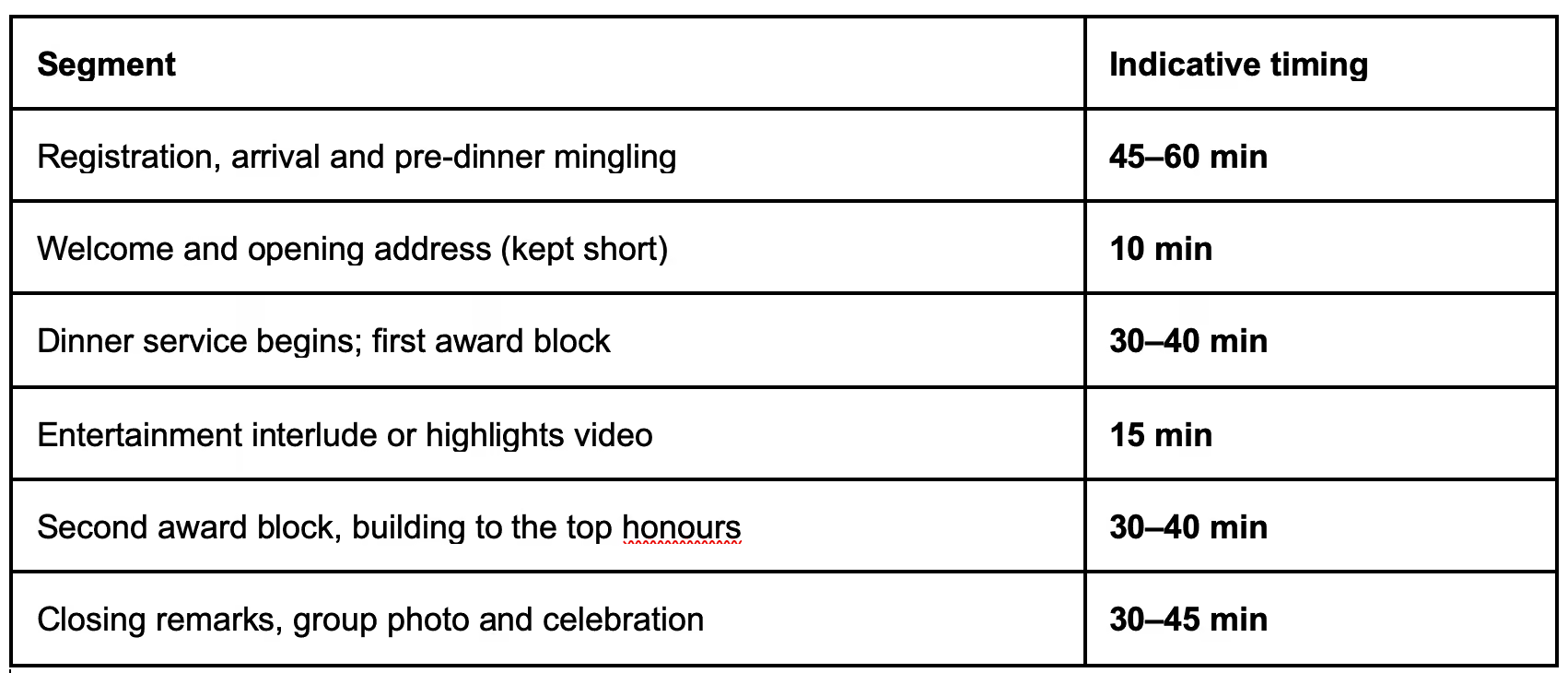
Sequence categories so the energy builds: open with team and peer-nominated awards, place long-service milestones mid-programme, and close with the marquee individual honours. Lock the document a week out, circulate it to the venue, production crew, emcee and presenters, and appoint one person to call the show.
Staging, AV and production
For rooms of 500 and above, effective staging ensures every award moment can be seen and felt across the room: a raised stage with a clean backdrop for photographs, screens that carry winners' names and faces to the back of the hall, walk-up music, and a rehearsed path from seat to stage. Schedule a full technical rehearsal, confirm name pronunciations with presenters in advance, and position a photographer at the stage so every winner leaves with a usable image.
Emcees and entertainment
A capable emcee keeps citations warm and the programme on schedule, which matters more as the guest count grows. Professional emcees, live entertainment and staging production are curated via UPlay for Business's partner network, so HR teams brief one point of contact rather than auditioning vendors separately.
Nomination and Judging Mechanics That Feel Fair
An awards night only motivates if the outcomes are trusted, and trust is built in the mechanics months before the event. Perceived favouritism in the results can undo the goodwill the evening was meant to create.
Open, simple nominations
Publish the categories and criteria early, keep the nomination form short, and make it accessible to employees who do not sit at a desk, whether through a mobile-friendly form, QR codes in break rooms or supervisors collecting nominations on shift. A four-to-six-week nomination window gives every site and shift time to take part.
A transparent judging panel
Use a mixed panel drawn from different departments and levels, score against the published criteria, and ask panellists to step back from categories where they have a direct interest. You do not need to publish scores, but you should be able to explain how any winner was chosen.
Communicating outcomes well
Notify winners' managers ahead of the night so attendance and shift cover can be arranged discreetly, and decide in advance whether finalists are announced beforehand. After the event, acknowledge shortlisted nominees as well as winners; in a workforce of thousands, the nominees you name well this year become the advocates who nominate next year.
Carrying Recognition Beyond the Night
The measure of a good awards night is what employees still feel long after it has ended, so plan the follow-through with the same care as the ceremony. Without it, the recognition peak decays into eleven quiet months.
Amplify in the days after
Share winner photographs and citations on internal channels within the week, brief managers to congratulate winners and nominees in their own team settings, and display the roll of honour where frontline employees will see it, on site noticeboards as well as the intranet.
Keep recognition running year round
Between ceremonies, recognition needs an always-on home. A [customised employee portal](https://www.uplaybusiness.com.sg/introduction-to-uplay-portal) gives HR one place to run peer shout-outs, track nominations, administer rewards and keep award winners visible across a large workforce, including employees who rarely open a laptop. It also feeds the next awards cycle: a year of recorded peer recognition is a far better nomination pool than a two-week scramble for names.
FAQs on Corporate Awards Night Planning
How long should a corporate awards night be?
Plan a total evening of around two to three hours, with the formal awards programme held to roughly 60 to 90 minutes. Allow three to five minutes per award presentation and trim the slate, rather than the pace, if the programme runs long.
What award categories should a corporate awards night include?
A balanced slate covers performance and results awards, values-based awards, long-service milestones and peer-nominated categories. Large organisations should add cross-department and frontline-specific categories so shift-based and operations employees have a genuine route to the stage.
Should awards be part of the Dinner & Dance or a separate event?
Either format works. An awards segment inside a Dinner & Dance suits organisations that want one flagship evening and a compact slate, while a standalone night suits a large slate of categories or a milestone year. The deciding factor is how much stage time the awards genuinely need.
How far in advance should we start planning an awards night?
For workforces of 500 and above, start six to nine months out: venues for year-end dates book early in Singapore, and nominations, judging and video production each need weeks of runway. Lock the venue and date first, open nominations around three months out, and finalise the run-of-show in the last fortnight.
How do we keep award judging fair?
Publish categories and criteria before nominations open, use a mixed judging panel that scores against those criteria, and ask panellists to step back where they have a direct interest. Being able to explain how each winner was chosen matters more than publishing every score.
Planning a Night Worth Remembering
A memorable awards night rests on four decisions made well: categories that give every employee, frontline and desk-based alike, a route to the stage; a format matched to your workforce and calendar; a disciplined run-of-show with proper staging; and follow-through that keeps the recognition alive after the lights come up. Organisations that connect the night to everyday recognition get compounding returns; those that treat it as an annual substitute start from zero every January. From employee recognition and wellness programmes to Family Days, Dinner & Dance celebrations and workforce engagement solutions, UPlay for Business helps organisations deliver meaningful experiences at scale while reducing administrative effort for HR teams. Request a package quote to plan your awards night, or see how other companies did it in our case studies.