
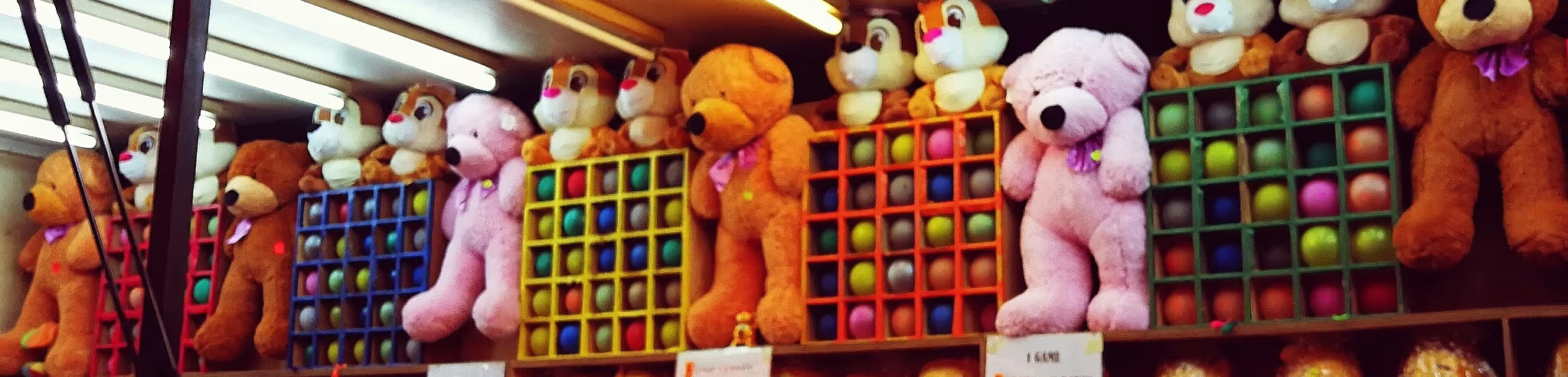
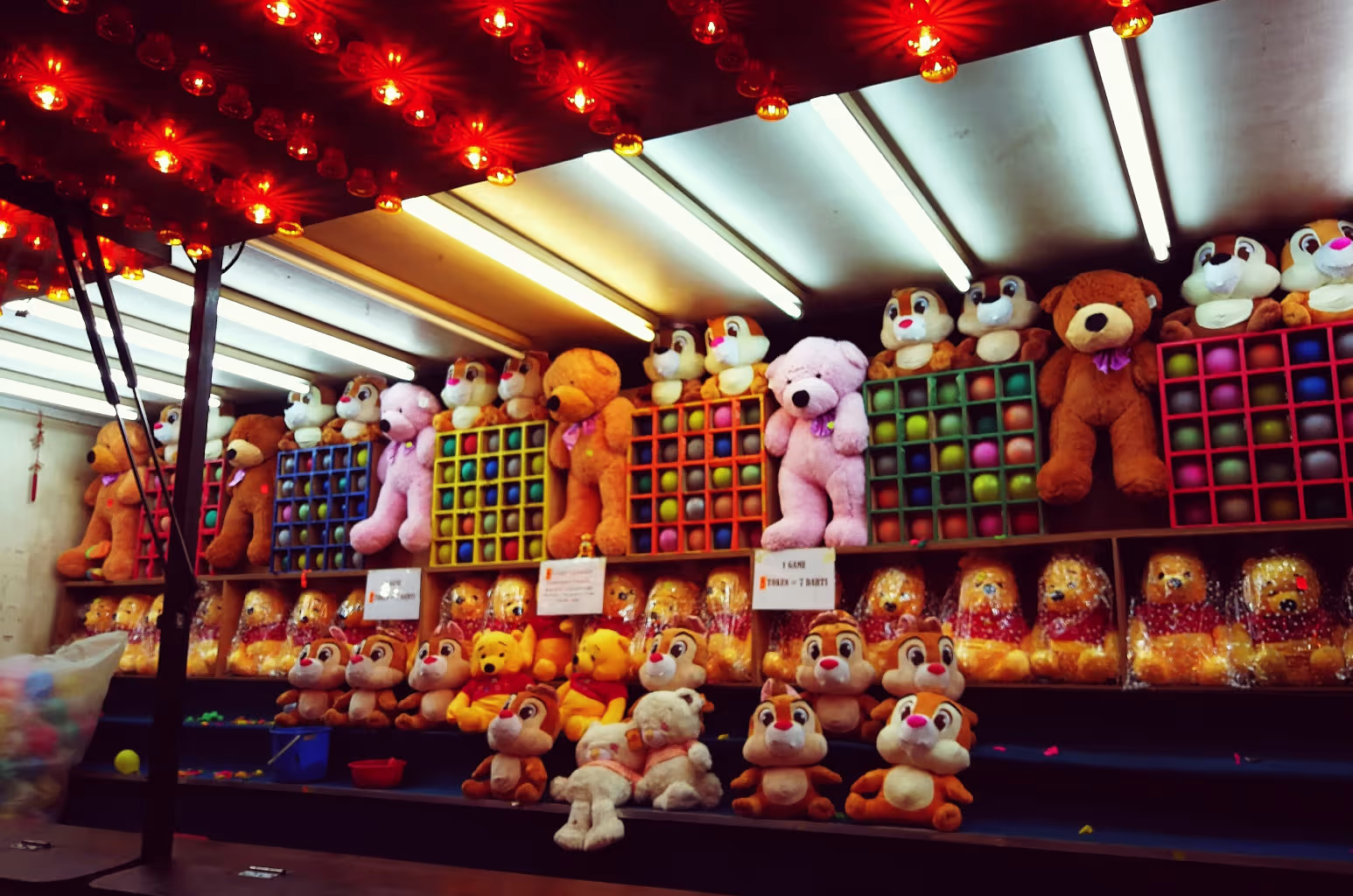
Much of a company's Family Day rests on one question: can every employee, and every family member they bring, find something to enjoy at the same time? For large workforces this is precisely why carnival games rental in Singapore is such a well-established Family Day format. A carnival does not ask 800 people to sit through one programme. It spreads them across dozens of booths, games and food stations, each absorbing a small crowd at once.
The planning challenge varies from a Dinner & Dance. Instead of one caterer and one venue, an HR team may be coordinating ten to fifteen separate vendors, each with its own setup needs, manpower arrangements and power requirements. This guide covers the popular booth and game categories, how to estimate booth numbers for large attendances, what rental packages typically include versus what to confirm in writing, and the safety, space and wet-weather considerations that matter at scale. Throughout, the rentals discussed are curated via UPlay for Business's partner network of vetted vendors, coordinated for you rather than left on your desk.
Why a Carnival Format Suits a Large-Workforce Family Day
A carnival works at scale because it is self-paced: guests circulate freely between booths rather than following a single timed programme. That property matters more as attendance grows.
It reaches a heterogeneous workforce
Large Singapore workforces are rarely uniform. Frontline, shift-based and desk-based employees work different hours across different sites, and their families span toddlers to grandparents. A carnival Family Day accommodates all of them at once, because there is no fixed start time to miss and no single activity that only suits one age group. Guests arriving from a morning shift can join two hours in and still experience the full event.
Attendance is larger than headcount
A Family Day is sized by attendance, not employee headcount. When employees bring partners, children and sometimes parents, a 500-employee organisation may host well over a thousand guests. The carnival format adapts well, given that booth numbers, food capacity and space are planned around total attendance from the start.
It amplifies year-round engagement
A Family Day is a milestone moment that sits on top of everyday engagement efforts, not a substitute for them. Organisations that run recognition and wellness initiatives throughout the year, for instance via a customised employee portal, find the carnival lands better because it celebrates a relationship that already exists.
Popular Carnival Games and Booths to Rent in Singapore
Most large Family Day carnivals draw from four broad categories, mixed deliberately so different ages and energy levels always have somewhere to go.
Classic fairground games and skill challenges
Ring toss, tikam boards, dart games, milk-can knockdowns, high strikers and prize wheels are staples for a reason: guests understand them at a glance and each round takes under a minute, which keeps queues moving. Skill challenges such as mini golf, mini bowling and target-shooting booths add a competitive layer that works well for inter-department friendly rivalries. A healthy mix of luck-based and skill-based booths lets young children and adults win prizes at similar rates.
Inflatable and active zones
Bouncy castles, inflatable obstacle courses and giant inflatable games give children a place to have fun while parents rotate through game booths. These units need the most floor space, ceiling clearance and supervision of any category, so they should be positioned first in the floor plan.
Food, snack and craft stations
Live food stations (popcorn, candy floss, kacang puteh, ice cream and local snacks) contribute to the overall experience, doubling as natural rest points that disperse crowds to avoid overcrowding. Craft stations such as sand art, badge-making or balloon sculpting suit younger children and give families a take-home keepsake. For large attendances, food booths deserve the same queue planning as games, since every guest will visit them at least once.
How Many Booths Does a Large Family Day Need?
Booth count is a queue-management decision: the goal is that no guest spends more time waiting than playing. There is no fixed package formula, but there is a useful planning baseline.
A queue-based rule of thumb
Singapore carnival rental guides commonly suggest planning one game booth for every 25 to 40 guests for a two-to-three-hour event, which works out to roughly 12 to 15 booths for a 500-guest carnival. The logic is simple: each booth can serve only so many rounds per hour, so booth numbers must scale with the number of guests circulating at any one time.
Applying it across large attendances
Applied to the attendance bands large organisations plan for, that baseline gives an indicative starting point. Refine it against your venue layout, event duration and programme:

Treat these as planning guidance rather than a quotation. The right number for your event depends on duration, layout and the mix of attractions, which is exactly what a site walkthrough and quote should confirm.
Why the attraction mix reduces queue pressure
Game booths are not the only crowd absorbers. Inflatable zones, food stations, craft tables and stage segments each pull guests out of game queues, so a well-mixed carnival needs fewer game booths per guest than a games-only layout. Longer event windows and staggered arrival by department achieve the same effect, which is particularly useful when shift-based employees arrive across the day.
Tip: Plan booth numbers on projected attendance, not employee headcount. RSVP data from previous Family Days is the most reliable multiplier; if you have none, assume each employee brings guests and size upward from there.
What Carnival Games Rental Typically Includes (and What to Confirm)
Inclusions vary significantly between vendors, and assumptions here are the most common source of Family Day budget surprises. Confirm every line in writing before signing.
Typically included
Across Singapore vendors, a carnival booth rental commonly covers the game structure and equipment, themed booth signage, delivery, setup and teardown. Many packages also provide a trained game master per booth and a starting quantity of prizes, but neither is universal.
Confirm before you sign
- Manpower: Is a game master included for each booth, for how many hours, and what happens beyond that window? Some vendors price manpower separately.
- Prizes: Are prizes included, in what quantity and tier, and can they be topped up on the day? At 500+ attendees, prize stocks can run out well before the event ends.
- Setup and teardown windows: What venue access time does the vendor need before and after the event, and does your venue booking cover those hours?
- Power and utilities: Which booths need power points, how many amps, and who supplies extension distribution? Inflatables need constant blower power throughout the event.
- Wet-weather and cancellation terms: What happens to outdoor bookings if it rains, and what are the postponement charges?
Because these answers differ vendor by vendor, coordinating ten to fifteen rentals means reconciling ten to fifteen different contracts. If you would rather compare consolidated options against your headcount and budget, request a package quote and UPlay for Business's team will scope it with you.
Safety, Space and Wet-Weather Considerations
At 500 to 1,000+ attendees, safety and space planning stop being a formality and become the backbone of the floor plan.
Inflatables and crowd safety
Rental operators' safety guidance is consistent: inflatable units should be anchored on level ground, supervised by a trained attendant at all times, and used by children of similar age and size in each session. Keep food and drinks away from inflatables, and build clear emergency access lanes through the carnival layout rather than filling every square metre with booths.
Space, ceiling height and power
Each booth needs its own footprint plus queue space in front of it, which is why a booth list that fits on paper can still fail on site. For indoor events, confirm ceiling clearance for inflatable units early, as rental guides typically cite a minimum of around 3 metres, with larger units needing more. Walk the venue with your vendor list to map power points, access doors for bulky equipment and the flow between game, food and rest zones.
A wet-weather-proof carnival floor
An outdoor field carnival needs a genuine wet-weather plan, not a tentage afterthought, because a downpour with 800 guests on site is a real operational risk in Singapore. This is where D'Marquee at Downtown East earns its place in Family Day planning: a 2,400 sqm pillarless, air-conditioned hall that functions as a blank-canvas carnival floor, with no pillars to break up booth rows or sightlines. Running the carnival fully indoors removes the weather variable altogether; alternatively, it can anchor the indoor half of an indoor-outdoor layout. Explore the options on our venues and partner locations page.
One Partner for the Whole Workforce, Not Just the Booths
The hardest part of a large carnival Family Day is catering to a genuinely diverse crowd: employees across different shifts and sites, alongside families spanning toddlers to grandparents, all in the same space on the same afternoon. Meeting that spread takes both a considered attraction mix and coordination across the many vendors it takes to deliver it.
Designed around every employee
The measure of a Family Day is whether frontline, shift-based and desk-based employees all experience it, and whether the families they bring enjoy it too, rather than whether the teams with convenient schedules turned up. That shapes carnival decisions directly: arrival windows that fit shift patterns, booth capacity sized for full attendance rather than optimistic estimates, and a programme with no single must-see moment that latecomers miss. UPlay for Business specialises in large workforces, and this whole-workforce lens is applied before any booth is booked.
One point of contact instead of a dozen vendor threads
A 20-booth carnival can involve separate vendors for games, inflatables, food stations, crafts and entertainment, each with its own contract, delivery schedule and site requirements. UPlay for Business curates these rentals via a vetted partner network and coordinates them through one point of contact, so your team briefs one party, receives one consolidated proposal and escalates to one number on event day. HR teams rarely lack the capability to manage vendors; they lack the hours, and consolidation hands those hours back.
FAQs on Carnival Games Rental in Singapore
What does carnival games rental in Singapore typically include?
Most booth rentals cover the game equipment, signage, delivery, setup and teardown, and many packages add a trained game master and a starting stock of prizes. Inclusions vary significantly between vendors, so confirm manpower hours, prize quantities, power needs and setup windows in writing before booking.
How many game booths do we need for a company Family Day?
Rental guides commonly suggest one game booth per 25 to 40 guests for a two-to-three-hour event, so a 500-guest carnival typically plans for roughly 12 to 15 booths. Size the count on total projected attendance, including family members, and adjust for event duration and how many non-game attractions share the load.
How far in advance should we book carnival rentals for a large event?
Singapore rental guides recommend booking around four to six weeks ahead for medium events and two to three months ahead for large carnivals or peak periods such as school holidays and the year-end season. Large-format venues for the same dates should be secured even earlier.
Can a carnival Family Day be held indoors?
Yes, and for large attendances an indoor or indoor-capable venue removes the wet-weather risk entirely. A pillarless hall such as D'Marquee's 2,400 sqm space at Downtown East can host booth rows, food stations and a stage in one air-conditioned floor; confirm ceiling clearance with your vendor if inflatable units are on the list.
How does UPlay for Business source carnival equipment?
Carnival games, booths and inflatables are curated via UPlay for Business's vetted partner network, with partners selected for their ability to deliver at large-workforce scale. UPlay for Business coordinates the chosen vendors and the manpower running each booth, alongside its owned venues such as D'Marquee and Wild Wild Wet at Downtown East, through a single point of contact for your event.
Bringing Your Family Day Carnival Together
A successful carnival Family Day comes down to four planning decisions: a booth mix that serves every age group, booth numbers sized on real attendance rather than headcount, contracts that spell out manpower, prizes and power, and a wet-weather plan strong enough to bet 800 guests on. Settle those early and the event largely runs itself on the day.
From employee recognition and wellness programmes to Family Days, Dinner & Dance celebrations and workforce engagement solutions, UPlay for Business helps organisations deliver meaningful experiences at scale while reducing administrative effort for HR teams. Request a package quote to scope a carnival for your workforce and dates, or see how other companies did it in our case studies.