

Most search results for art jamming in Singapore target individuals booking a weekend studio slot. HR and people teams are asking a different question: can a facilitated painting session work as an employee engagement activity for a workforce of 500 or more, spread across departments, shifts and sites? The answer is yes, but only when the format, venue and facilitation are designed for corporate scale from the outset, rather than adapted from a consumer studio template.
This guide covers what art jamming involves for corporate groups, why it has earned a place in employee engagement programmes, the formats that scale from 500 pax to company-wide, where it fits in the corporate event calendar, what a large session needs from a venue, and how HR should brief one. Throughout, the focus is on group bookings for large workforces: departmental rollouts, appreciation initiatives, Dinner & Dance pre-event activities and conference breakouts, with engagement follow-through that continues after the paint dries.
What Art Jamming Involves for Corporate Groups
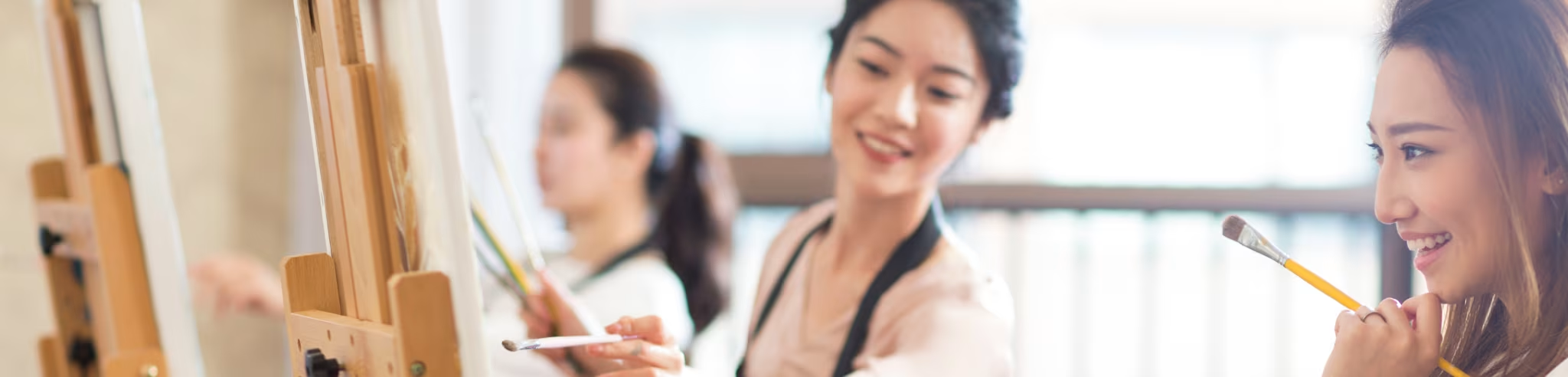
Art jamming is a facilitated painting session in which every participant receives a canvas, acrylic paints, brushes and an apron, then creates freely with light guidance rather than formal instruction. There is no technique test and no expectation of talent, which is precisely why it translates so well from studios to corporate settings.
The shape of a session
A corporate session typically runs from 90 minutes to two hours and follows a simple arc: a short welcome and briefing, a demonstration of basic brush and colour techniques, an extended free-painting block with facilitators circulating to help, and an optional sharing segment at the end. Because the structure is loose, the session absorbs latecomers and early leavers without falling apart, a practical advantage when hundreds of employees are moving through a venue on real schedules.
Materials and facilitation via partner studios
For group bookings, materials and facilitation come as a package: canvases or alternative surfaces, paints, brushes, easels or table setups, protective sheeting and trained facilitators who keep energy up and assist hesitant painters. Creative experiences like art jamming are curated via UPlay for Business's partner network, with vetted facilitation teams coordinated through a single point of contact alongside the venue, catering and programme, and with attendance, RSVPs and transport from multiple work sites handled by the same team.
No experience required, by design
The format is deliberately beginner-first. Facilitators demonstrate enough technique for everyone to finish a piece they are happy with, and abstract or theme-led prompts allow for a more casual experience. That inclusivity matters at workforce scale, where participants range from operations crews to finance analysts and any activity with a skill barrier quietly excludes part of the organisation.
Why Art Jamming Belongs in an Employee Engagement Programme
Art jamming earns its slot in an engagement calendar because it pairs a measurable wellbeing effect with genuinely broad accessibility. According to Gallup's State of the Global Workplace report, only 20 per cent of employees worldwide were engaged in 2025, which is exactly why HR teams are looking beyond the annual dinner for activities that reach more of the workforce more often.
A wellbeing benefit you can measure and report
Creative activity has evidence behind it. A Drexel University study found that cortisol, the body's main stress hormone, fell in 75 per cent of participants after just 45 minutes of art making, and that prior art experience made no difference to the result. For an HR planner justifying spend to finance, that is a rare thing: an enjoyable activity with a published physiological basis for its wellbeing claim.
An activity the whole workforce can join
Many engagement activities tend to self-select for a subset of employees: sports formats favour the fit, quizzes favour the fluent, and evening events favour those on standard hours. Painting has no such filter. Delivered in the right formats, it works for frontline, shift-based and desk-based employees alike, which reflects a key principle of any employee engagement, recognition and wellness programme: no employee left behind.
An amplifier, not a substitute
A painting session will not fix engagement on its own, and it should not be positioned that way internally. Engagement is a year-round effort; a well-run creative session sits on top of everyday engagement work as a visible, memorable amplifier, and its value compounds when participation feeds into ongoing recognition rather than ending at the venue door.
Art Jamming Formats That Scale to Large Workforces
The consumer studio model, 20 painters around a few tables, does not simply multiply by 40. Large workforces need one of three delivery formats, chosen by headcount, site spread and schedule reality.

Departmental rollouts for 500 to 800 pax
At this band, the strongest format is a series of departmental sessions run to an identical template over several weeks: same facilitators, same materials, same theme, different audiences. Each session stays intimate enough for facilitators to engage individuals, while the rollout as a whole reaches the full population. A shared theme, such as each department painting one panel of a company-wide mural, connects the series into a single visible initiative.
Large-scale single-venue sessions for 500 to 800 pax
One hall, one afternoon, hundreds of easels: a single-venue session turns art jamming into a company-wide moment rather than an activity. This format needs a large, protected floor plan, zoned seating by team, amplified facilitation from a stage and a materials operation planned like catering. Done well, it can create a powerful shared memory, while leaving the organisation with a tangible piece for display.
Staggered runs for 800 to 1,000+ pax and shift-based teams
For workforces of 800 or more, or 24/7 operations where no single timeslot works for everyone, staggered runs offer a more practical solution: repeated sessions across multiple days, timed around shift patterns, including on-site delivery where frontline teams cannot travel. The design goal is equivalence. Night-shift employees should get the same facilitators, materials and finished-artwork moment as headquarters, because a rollout that treats some employees as an afterthought reads clearly as one.
Event Use Cases Across the Corporate Calendar
Art jamming rarely stands alone in the calendar; it slots into moments HR is already planning. Four placements come up most often for large organisations.
Engagement programme and appreciation initiatives
As a quarterly engagement activity or an employee appreciation initiative, a painting rollout gives HR a fresh alternative to food-led gestures. Tying the artwork to recognition strengthens it: finished pieces displayed in the office, a leadership walkthrough of the gallery, or shout-outs to contributing teams turn a pleasant afternoon into a visible statement: the organisation notices its people.
Dinner & Dance pre-event activity
A collaborative canvas works well in the hours before a Dinner & Dance: guests add brushstrokes to a large communal piece during registration and cocktails, and the finished artwork is unveiled on stage during the evening. It occupies the awkward arrival window, mixes tables before seating, and leaves the company with a keepsake tied to the event.
Conference breakouts and offsite energisers
As a conference breakout, a 60 to 90 minute guided painting block gives delegates a genuine mental reset between content-heavy sessions, with the Drexel findings above making the wellbeing rationale easy to defend on the agenda. No pre-work from delegates is required, which conference organisers appreciate.
Venue, Space and Logistics at Scale
The venue question is where large-format art jamming most often goes wrong, because paint, crowds and carpeted ballrooms are an unforgiving combination. Space, protection and scheduling deserve as much attention as the creative brief.
Space and layout
Every painter needs a seat, table or easel space, elbow room and access to shared paint stations, so a session for several hundred employees needs a genuinely large, unobstructed floor plate rather than a subdivided function room. Pillarless halls make zoning and stage sightlines far easier; D'Marquee at Downtown East, a 2,400 sqm pillarless, air-conditioned blank canvas, meets these needs. You can also explore more owned venues and partner locations here.
Protection, setup and turnaround
Acrylic paint is forgiving on aprons and unforgiving on floors. At scale, plan for full floor sheeting in painting zones, dedicated wet-canvas drying areas, wash stations, and a setup and teardown window on either side of the session. Partner facilitation teams handle materials logistics as part of the package, but the venue booking must include the setup time, which is a detail internal bookers frequently miss.
Scheduling around a heterogeneous workforce
Timing is an inclusion decision. A 3pm weekday slot suits desk-based teams and excludes almost everyone on shift, so large employers should plan session timings from the shift roster outwards, not from the HR calendar inwards. If you are weighing formats against your headcount and sites, request a package quote and the team can shape venue, partner facilitation and scheduling options around your workforce profile.
How HR Should Brief an Art Jamming Session
A good brief is the difference between a decorative afternoon and an engagement outcome. Three elements matter most.
Define the objective and the audience first
State what the session is for: appreciation after a demanding quarter, a wellness calendar milestone, a D&D warm-up, or the creative anchor of a broader engagement push. Then define the audience honestly, including headcount by band (500–800, 800–1,000+), the split of frontline, shift-based and desk-based employees, sites involved, and languages spoken on the ground. Facilitation quality depends on partners knowing who is in the room.
Specify the practical envelope
A complete brief covers format (individual canvases, collaborative mural, or both), theme and how it connects to company identity, venue or on-site delivery requirements, preferred dates with shift-pattern constraints, accessibility needs, and what happens to the artwork afterwards. It should also state what is out of scope; if leadership wants speeches, say so early, because a 20 minute address changes the session design.
Plan the follow-through, then measure it
Before the event, think about participation tracking, measurement and what comes after. On a customised employee portal, HR can track sign-ups and attendance across departments and shifts, run post-session pulse checks, award recognition points to participating teams and carry the initiative into the next engagement activity. Participation rates across employee segments, compared against previous activities, provide a clear indication of whether the format is improving.
FAQs on Art Jamming in Singapore for Corporate Groups
What is art jamming?
Art jamming is a facilitated freestyle painting session in which participants each work on a canvas with acrylic paints, guided by facilitators rather than taught formally. In a corporate setting it is delivered as a group experience for departments or entire workforces, with materials, facilitation and venue coordinated as one package.
Do employees need any art experience to take part?
No. Sessions are designed for complete beginners, with facilitators demonstrating enough basic technique for everyone to finish a piece. Research from Drexel University also found the stress-reduction effect of art making was unrelated to prior art experience.
How long does a corporate art-jamming session take?
Most corporate sessions run 90 minutes to two hours, including the briefing, demonstration, painting time and an optional sharing segment. As a conference breakout or D&D pre-event activity, the format can compress to around an hour using smaller canvases or a collaborative mural.
How many employees can take part at once?
Departmental rollout waves and large single-venue sessions both suit 500 to 800 employees. Beyond 800 pax, or where shift patterns rule out a single timeslot, staggered runs across days, shifts and sites deliver the same experience to the full workforce.
Can art jamming work for shift-based and frontline employees?
Yes, and it is one of the format's main strengths, because it has no skill or language barrier and can be delivered on-site in staggered runs timed around shift rosters. The key is planning session timings from the shift roster outwards and keeping the experience identical across every run.
Bringing Creative Engagement to Your Whole Workforce
Art jamming translates to corporate scale better than most activities: it is inclusive by design, backed by published wellbeing evidence, and deliverable as departmental rollouts, single-venue moments or staggered runs for workforces of 500 to 1,000 and beyond. The organisations that get the most from it treat the session as one visible moment in a year-round engagement programme, with participation tracked and recognition carried forward rather than left at the venue.
From employee recognition and wellness programmes to Family Days, Dinner & Dance celebrations and workforce engagement solutions, UPlay for Business helps organisations deliver meaningful experiences at scale while reducing administrative effort for HR teams. Request a package quote to scope a creative session for your workforce, or see how other companies did it in our case studies.